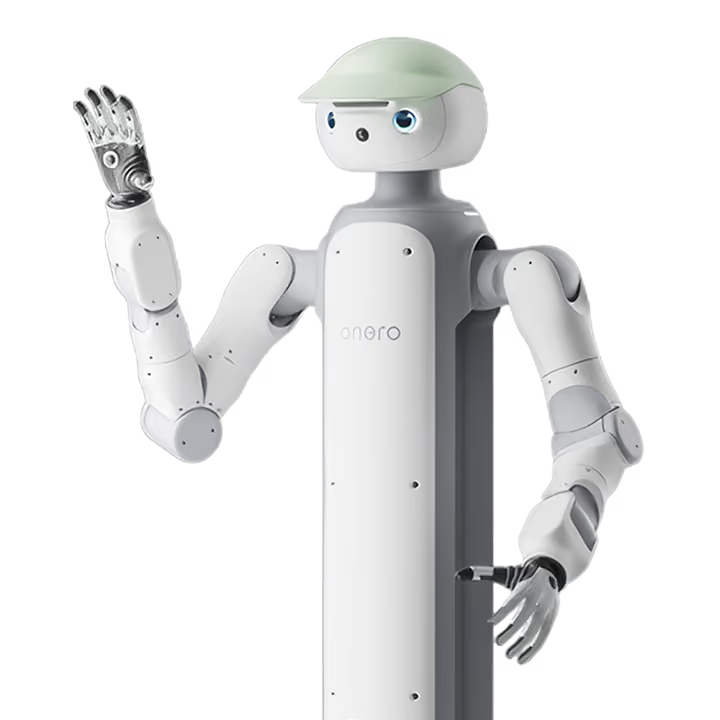
Image:
Booster Robotics
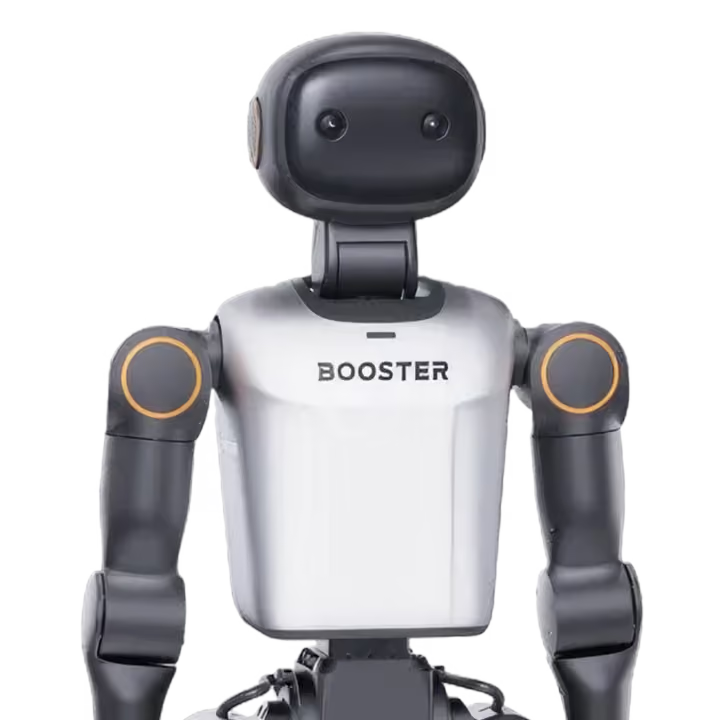
The Booster T1 is a lightweight, high-performance, open-source humanoid robot designed for developers and researchers, featuring ROS2 compatibility, advanced simulation, and AI capabilities.


ROS 2 compatible

Height
118
cm

Weight
30
kg

Speed
0.97
m/s

Payload
5
kg

Mobility
Bipedal

Actuators
Force-Controlled Joint

DoF (Domains of freedom)
23
°

with full API access and ROS2 support.
bipedal locomotion tailored for complex environments and RoboCup.

Maintains a humanoid upper body for natural interaction and object manipulation.
for whole-body control and advanced manipulation.

The Booster T1 is a lightweight, high-performance, open-source humanoid robot designed for developers and researchers, featuring ROS2 compatibility, advanced simulation, and AI capabilities.
The Booster T1 is a 118 cm bipedal robot optimized for researchers, offering 200 TOPS of AI performance via an NVIDIA Orin GPU. With 23 fully force-controlled joints and dual encoders, it excels in dynamic balance and complex gait dynamics. It provides a robust ROS 2 interface and 2 hours of autonomy, making it a leading choice for developing the next generation of embodied AI.
Image:
Booster Robotics
A high-compute R&D powerhouse designed for embodied AI and agile locomotion research, serving as a robust, fall-resistant platform for developers and competitive robotics teams worldwide.
Booster T1 by Booster Robotics
Actuators
Force-Controlled Joint
DoF (Domains of freedom)
23
°
Height
118
cm
Speed
0.97
m/s
Weight
30
kg
Payload
5
kg

Runtime
2
h

OS / AI System
ROS 2 compatible
Bipedal
ROS 2 compatible
The T1 integrates custom dual-encoder joints that utilize combinational control (torque, speed, and position) alongside a proprietary intelligent Over-The-Air (OTA) update system and a highly robust RL-based balance framework for dynamic impact recovery.
Image:
Booster Robotics
Notable users include the 2025 RoboCup "AdultSize" Champions (Hephaestus Team from Tsinghua University), Purdue University, Carnegie Mellon University (FALCON RL framework), and UC Berkeley (FastTD3 RL Algorithm).
makes T1 capable of using its integrated 6-microphone array, built-in speaker, and optional edge LLM integration for voice and speech recognition (ASR) as well as text-to-speech (TTS).
(like the RH56DFX) can be equipped, featuring active tactile sensors to execute human-like manipulation and grasping tasks.
balance framework allows the robot to mimics human agility. T1 recovers from pushes up to 15N.s, balances smoothly, and can automatically stand back up from a prone position.


by
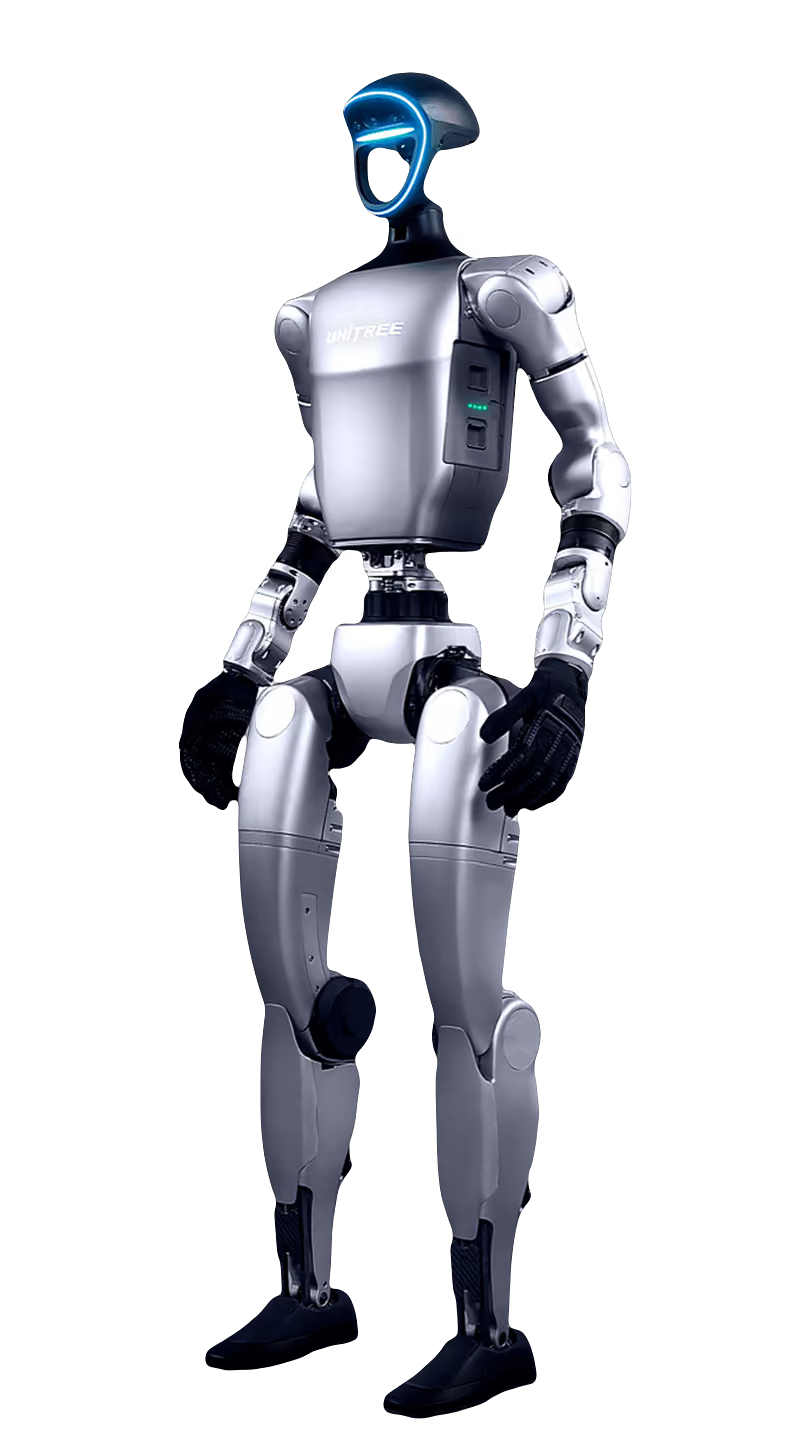
Unitree Robotics
A general-purpose, full-size humanoid robot focused on affordability and high-performance locomotion.

by
Galbot
A full-sized, electric-powered bipedal humanoid robot focused on autonomous task execution.

by
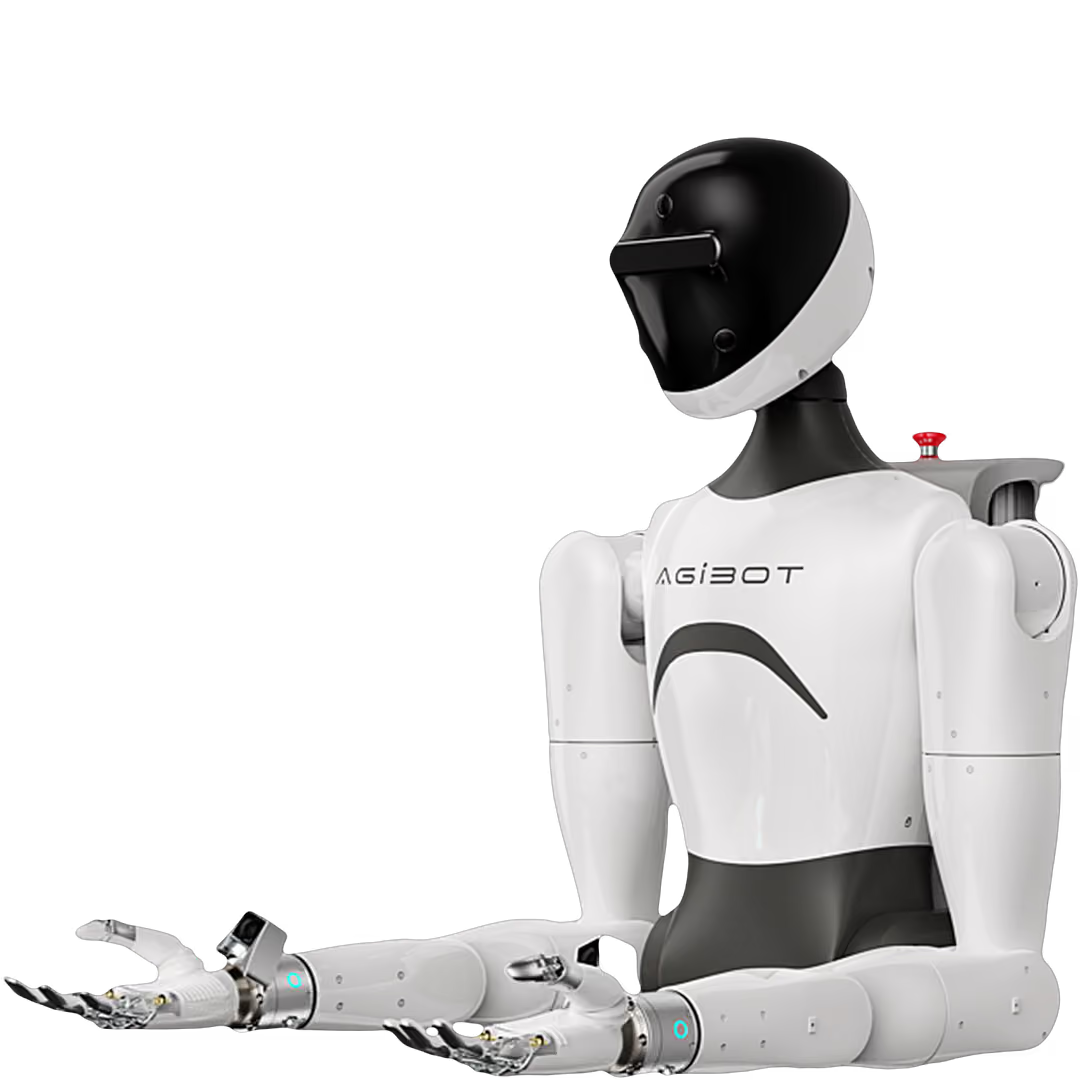
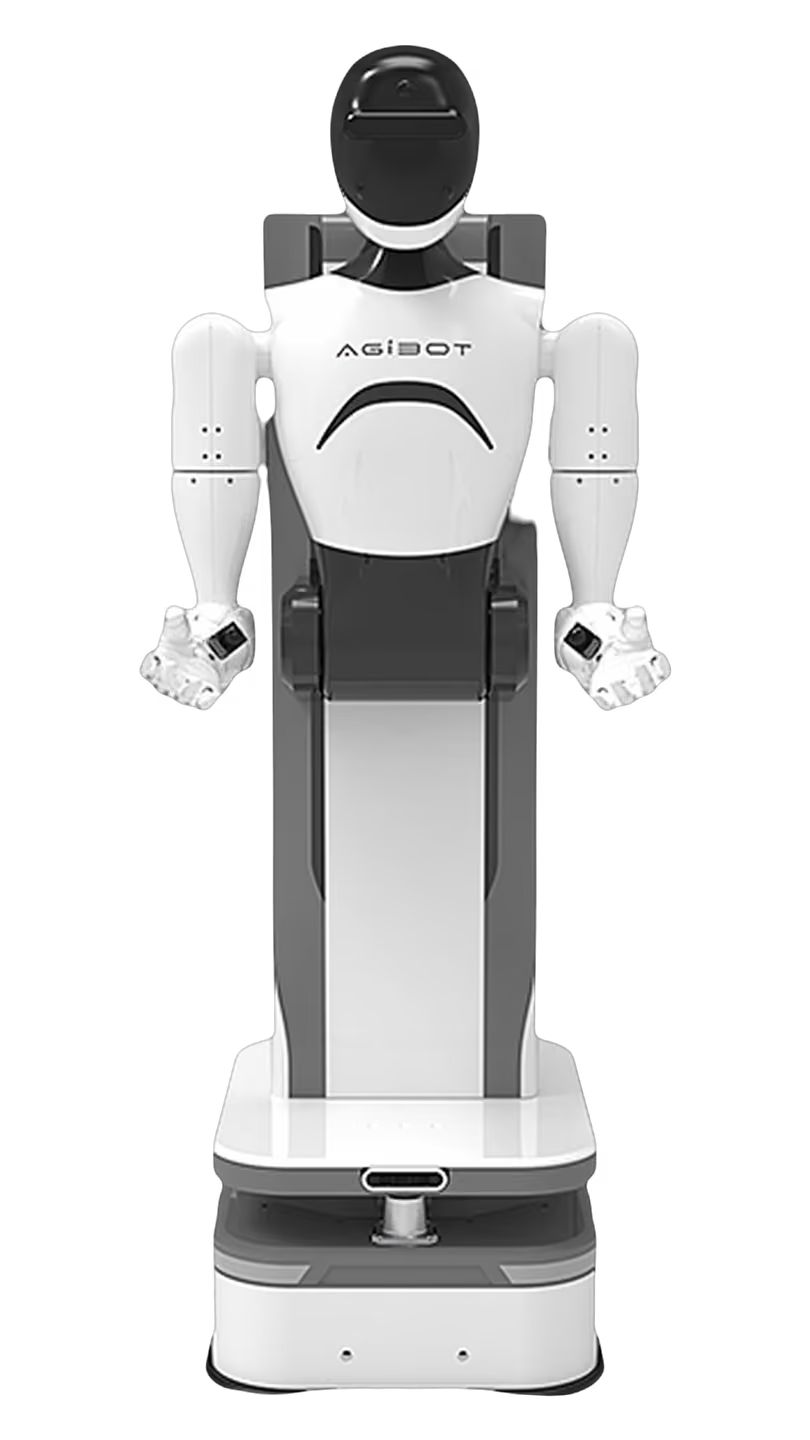
AgiBot
A general-purpose humanoid robot platform designed for scalable industrial applications and AI development.

by
SwitchBot
A multitask household humanoid robot utilizing VLA models for complex chores like laundry and dishwashing in real home environments.