Image:
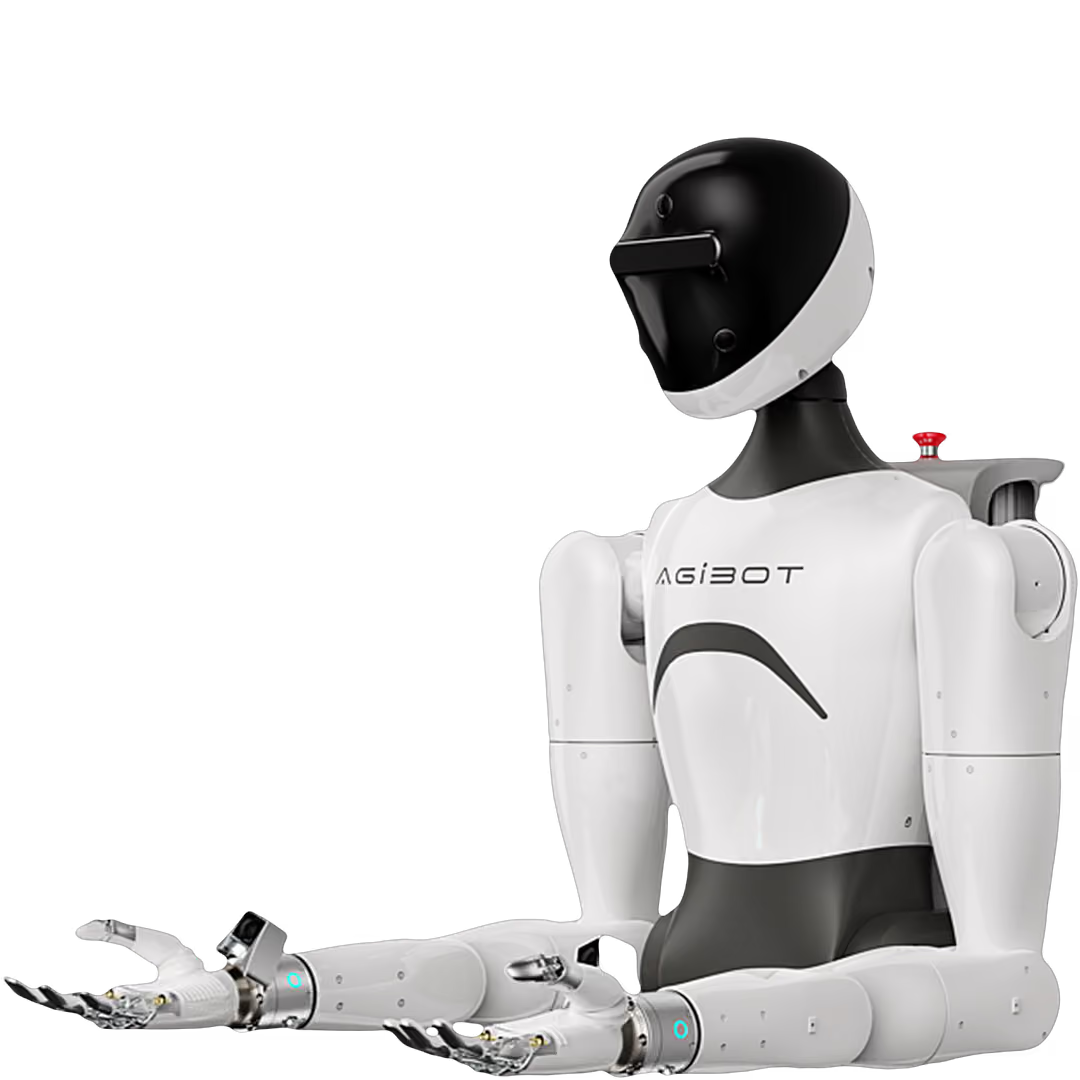
AgiBot
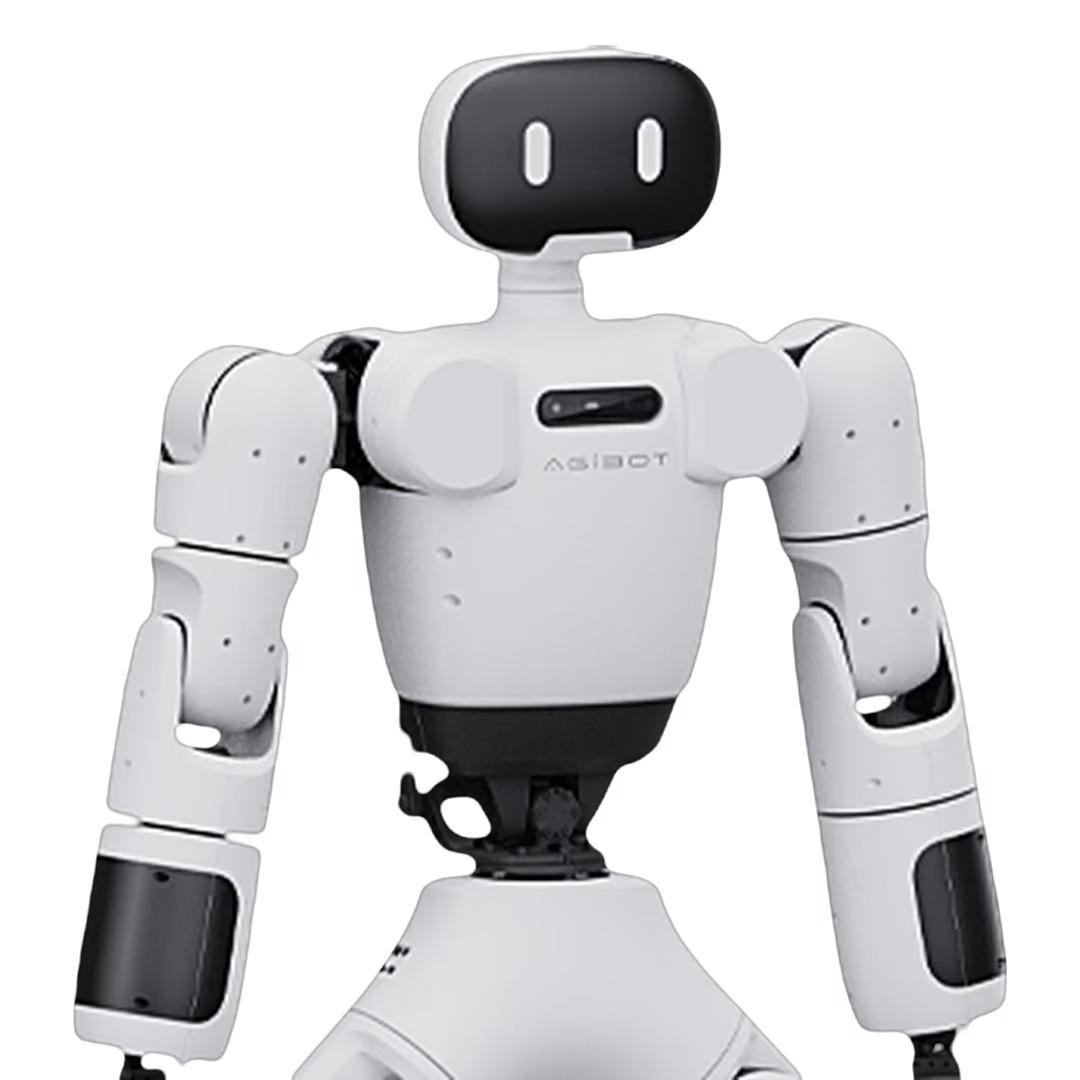
A versatile humanoid robot model focusing on mobility and autonomous navigation for diverse service scenarios.

AimRT middleware, RL.

Height
130
cm

Weight
33
kg

Speed
1.0
m/s

Payload
0.5
kg

Actuators
Proprietary PowerFlow servo actuators with R86-3 flagship units delivering up to 200 Nm peak torque.

DoF (Domains of freedom)
34
°

Modular flagship actuators (R86-3) delivering industry-leading 200Nm peak torque.
Integrated embodied intelligence data collection for rapid AI training and iteration.
Free access to schematics, software frameworks, and middleware for all developers.
1kHz real-time control via a high-speed EtherCAT-to-FDCAN communication bus.

A versatile humanoid robot model focusing on mobility and autonomous navigation for diverse service scenarios.
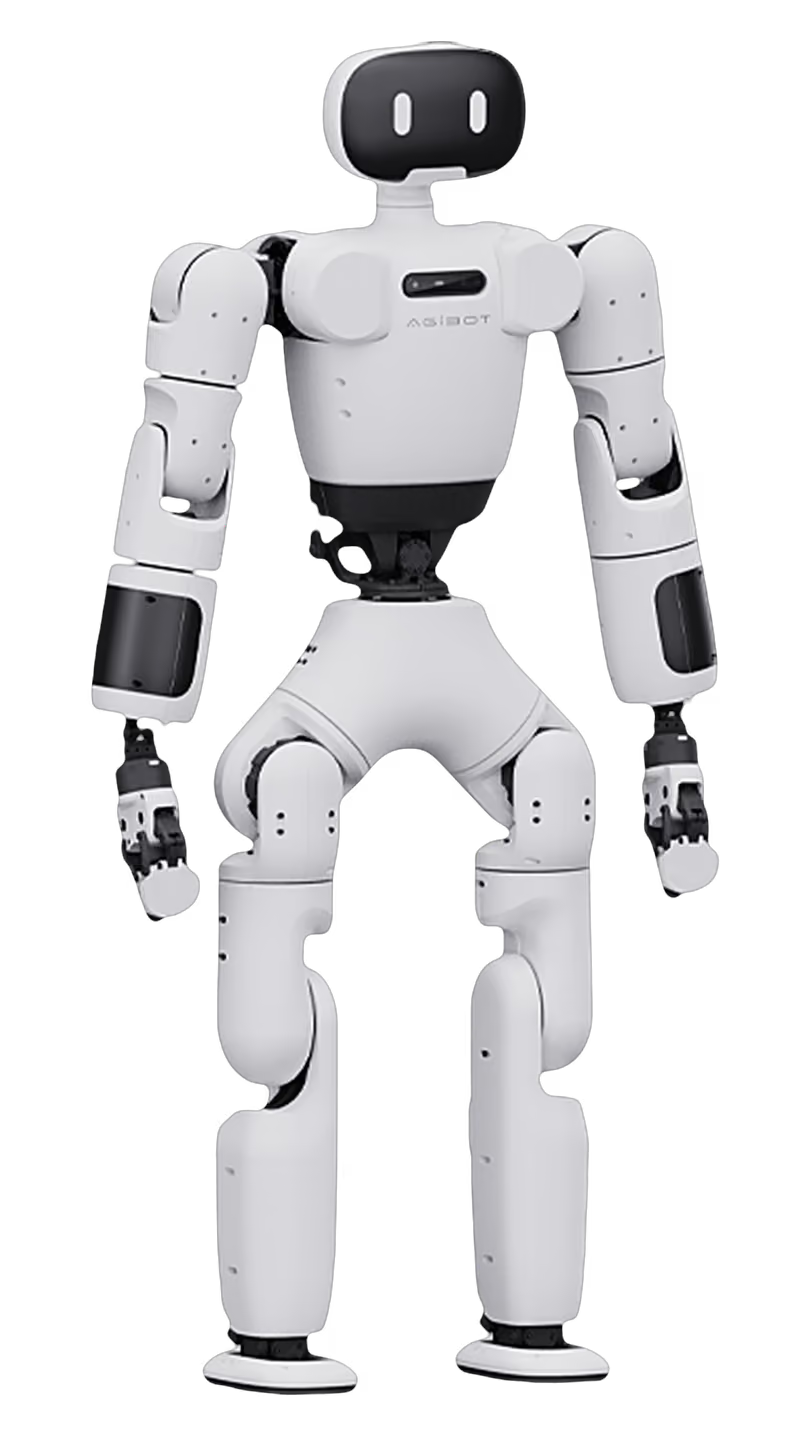
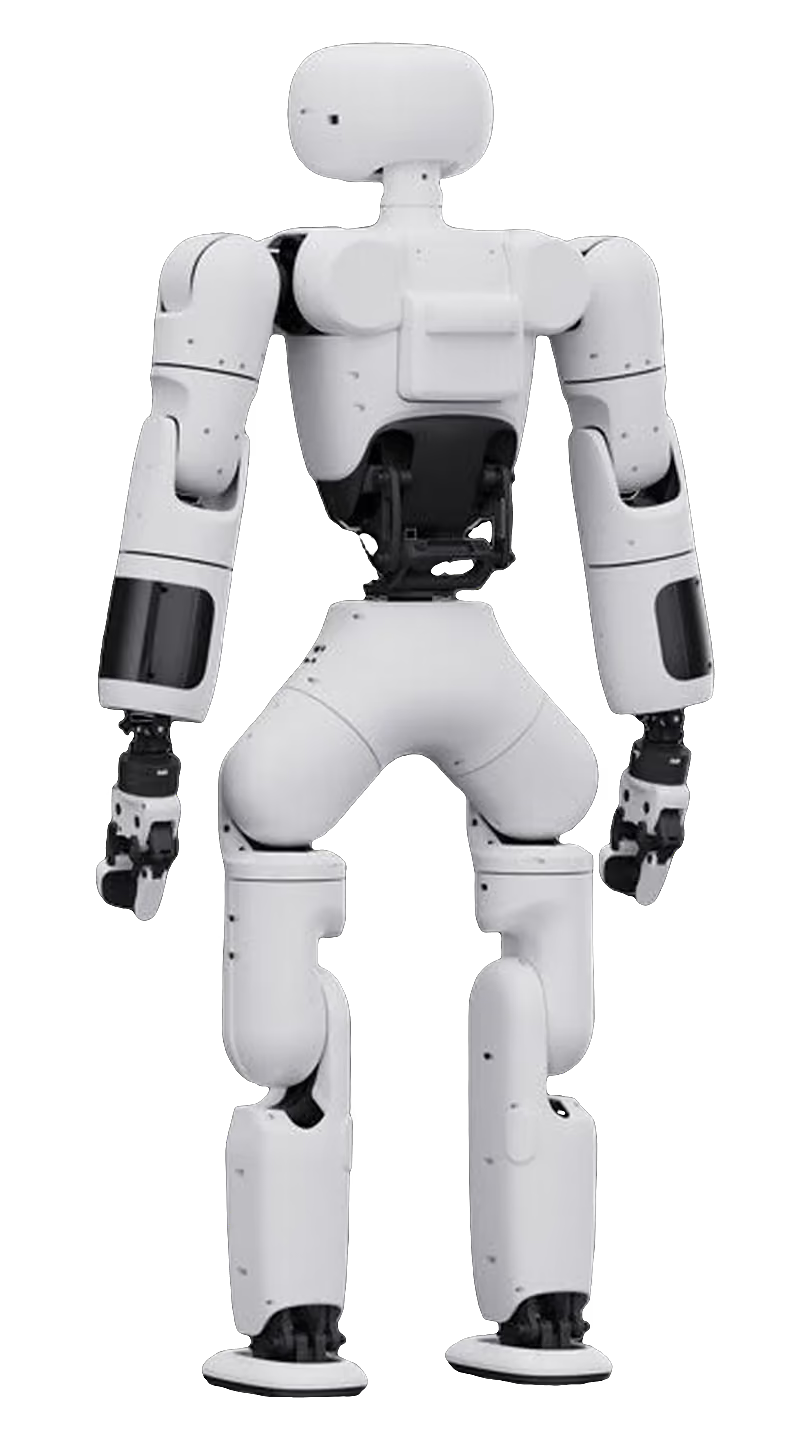
Standing 130 cm and weighing 33 kg, X1 features 34 degrees of freedom. It walks at 1 m/s and operates for 2 hours per battery charge on an open-source AimRT framework.
Image:
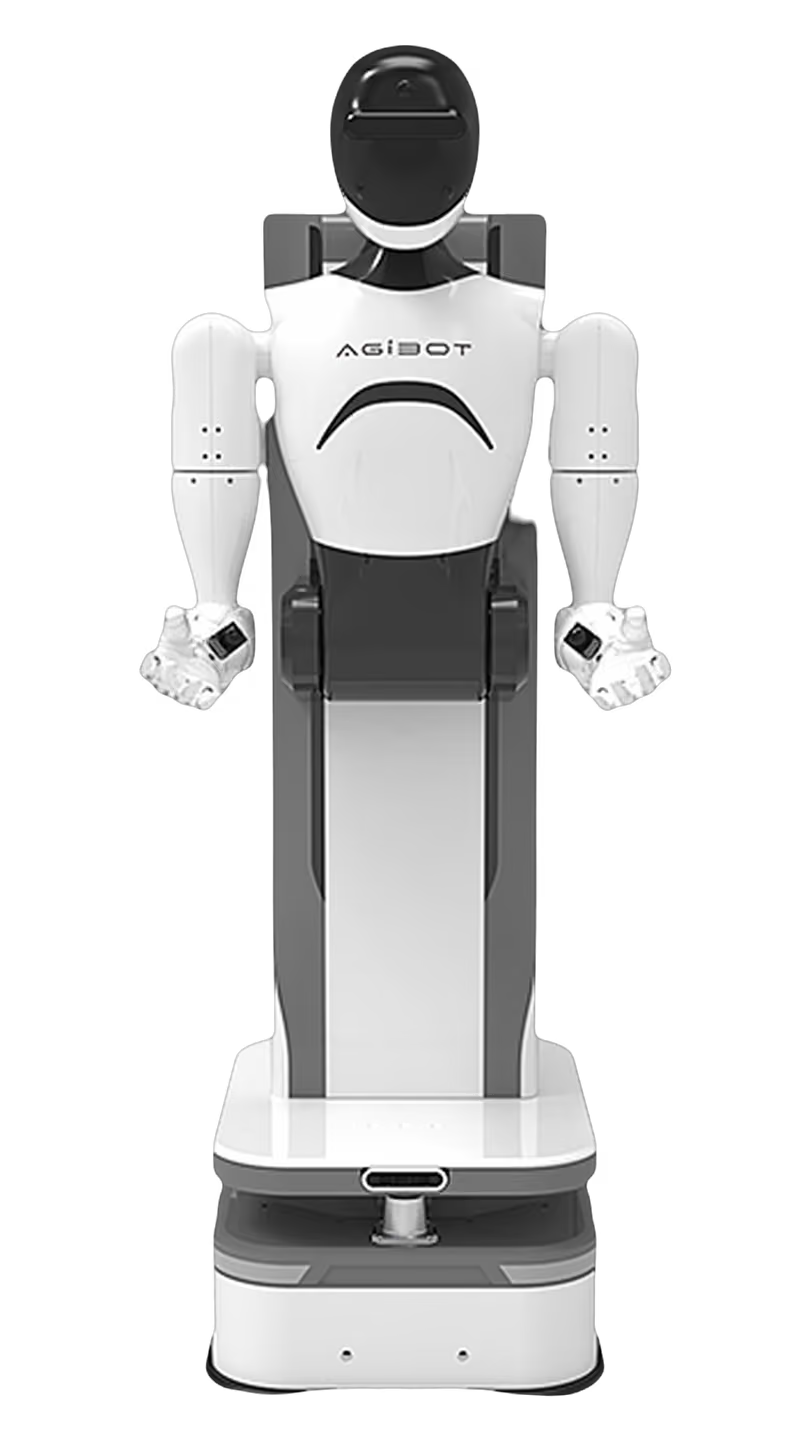
AgiBot
Designed for academic budgets and maker spaces. Key features include full hardware documentation (CAD files), modular replacement joints, and the "AGIBOT World Dataset" for training embodied AI.
X1 by AgiBot
Actuators
Proprietary PowerFlow servo actuators with R86-3 flagship units delivering up to 200 Nm peak torque.
DoF (Domains of freedom)
34
°
Height
130
cm
Speed
1.0
m/s
Weight
33
kg
Payload
0.5
kg

Runtime
2.0
h

OS / AI System
AimRT middleware, RL.
Built around proprietary PowerFlow quasi-direct-drive servo modules (R86-3) delivering 200 Nm peak torque. The tech stack is Linux-based and uses a distributed EtherCAT-to-FDCAN bus for 1 kHz control.
Image:
AgiBot
Targeted at researchers and developers who prioritize "hackability." Customers include universities and startups that require a low-cost, fully open hardware/software stack to train custom embodied AI policies.
Moving beyond the "black box" design of commercial service humanoids, the X1 is an entirely open-source platform. It shares the A2 series' high-torque PowerFlow actuators but adds modular repairability and a Linux-based SDK.
Built as a fully open platform (AimRT framework) to encourage a "human-centric" developer community to modify and improve every aspect of its social and physical behavior.
Equipped with force sensors and LiDAR for "learning through interaction," enabling researchers to train the robot in new social tasks using real-world human data.
Utilizes PowerFlow servo actuators to achieve high torque density, allowing the 33kg robot to move with a nimble, almost human-like athletic grace in tight lab spaces.



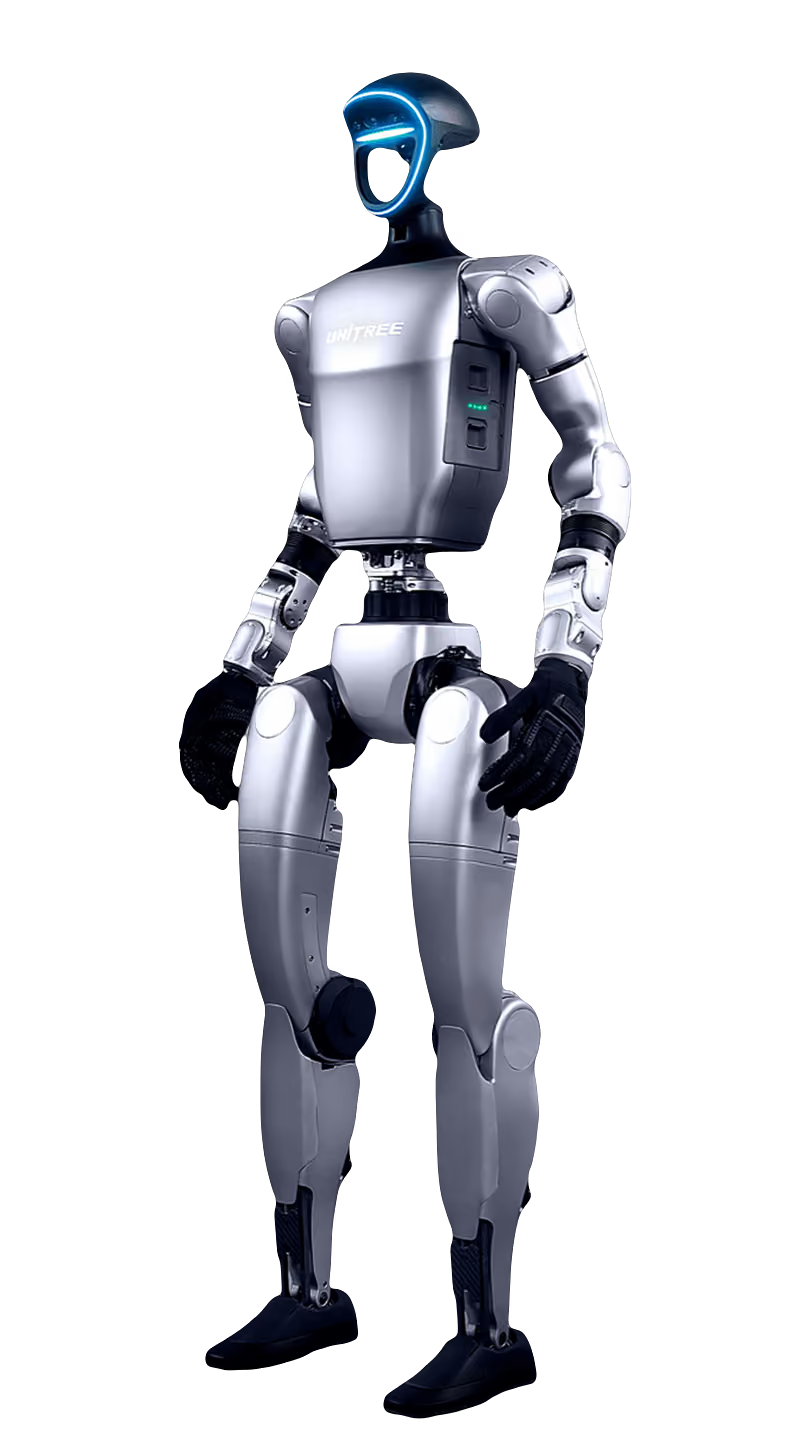
by
Unitree Robotics
A general-purpose, full-size humanoid robot focused on affordability and high-performance locomotion.

by
Galbot
A full-sized, electric-powered bipedal humanoid robot focused on autonomous task execution.
by
AgiBot
A general-purpose humanoid robot platform designed for scalable industrial applications and AI development.

by
SwitchBot
A multitask household humanoid robot utilizing VLA models for complex chores like laundry and dishwashing in real home environments.