Humanoid Feature Explained

Learn what this feature means, why it is essential, and how it is used across different humanoid robots.
Logo Icon - Creditflow Webflow Template | BRIX Templates

Physical Form

Soft

Robots made from compliant, flexible materials.

The key advantages of soft robots are their inherent safety and adaptability, which allows them to operate in confined or delicate environments. They are less likely to cause injury in a collision. Made from soft materials, "soft robotics"

Examples

Soft robots are being developed for applications such as invasive surgery, where they can navigate complex internal body structures.

Humanoids With
Soft

Human

by

Nature

The original bipedal model. Extremely high maintenance, notoriously unreliable, and ships with buggy firmware. (f. ~300,000 BCE)

Neo Gamma

by

1X Technologies

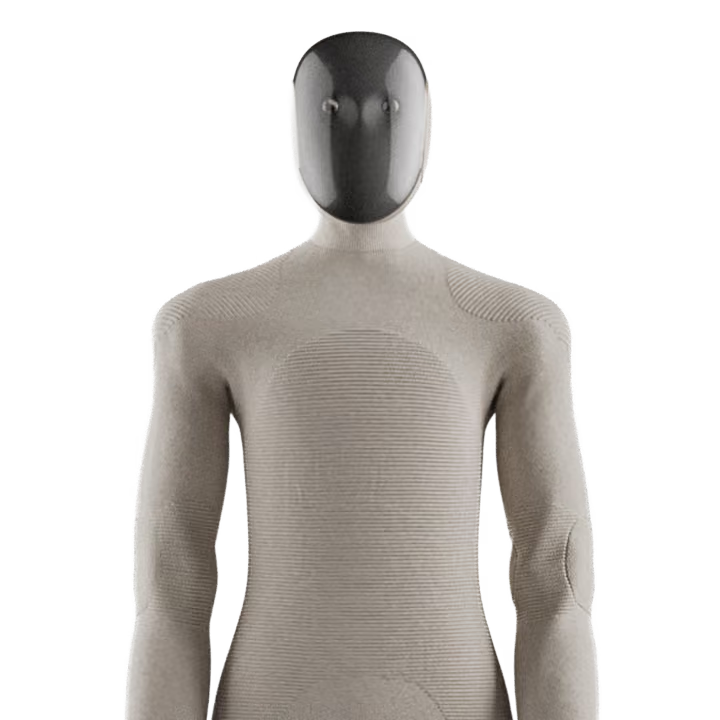
The next-generation domestic humanoid featuring a muscle-like soft body design and advanced visual manipulation for household tasks.


Missing a humanoid robot?

Browse more humanoid robot features

Filter the database by specific technical capabilities, mechanical specs, and physical attributes.

Agility
DoF
Dynamic Balance
Electromechanical
Hydraulics
Mobility
Navigation
Proprioception
Rotors
Anthropomorphic
Arms
Bio-Inspired
Bipedal
Dexterity
Digital Twin
Durability
Electromechanical
Furry
Hydraulics
Legs
Lifelike
Rugged
Skin
Soft
Versatility
Wheels
Whole-Body Control
Customizable
Electromechanical
Hydraulics
Modular
Autonomous
Battery Powered
Electromechanical
Energy Harvesting
Fully Autonomous
Hydraulics
Partially Autonomous
Self-Replication
Emotional Expression
HRI
Micro-Expressions
Speech
Voice Control
Grippers
Hands
Haptic Feedback
Manipulation
Payload
Fail-safe System
Lidar
Obstacle Avoidance
Tactile Sensors
Visual Sensors
AI
Cloud Connectivity
Emotional Intelligence
Facial Recognition
Kinesthetic Learning
Learning
Social Cues
Swarm Intelligence
Teleoperated