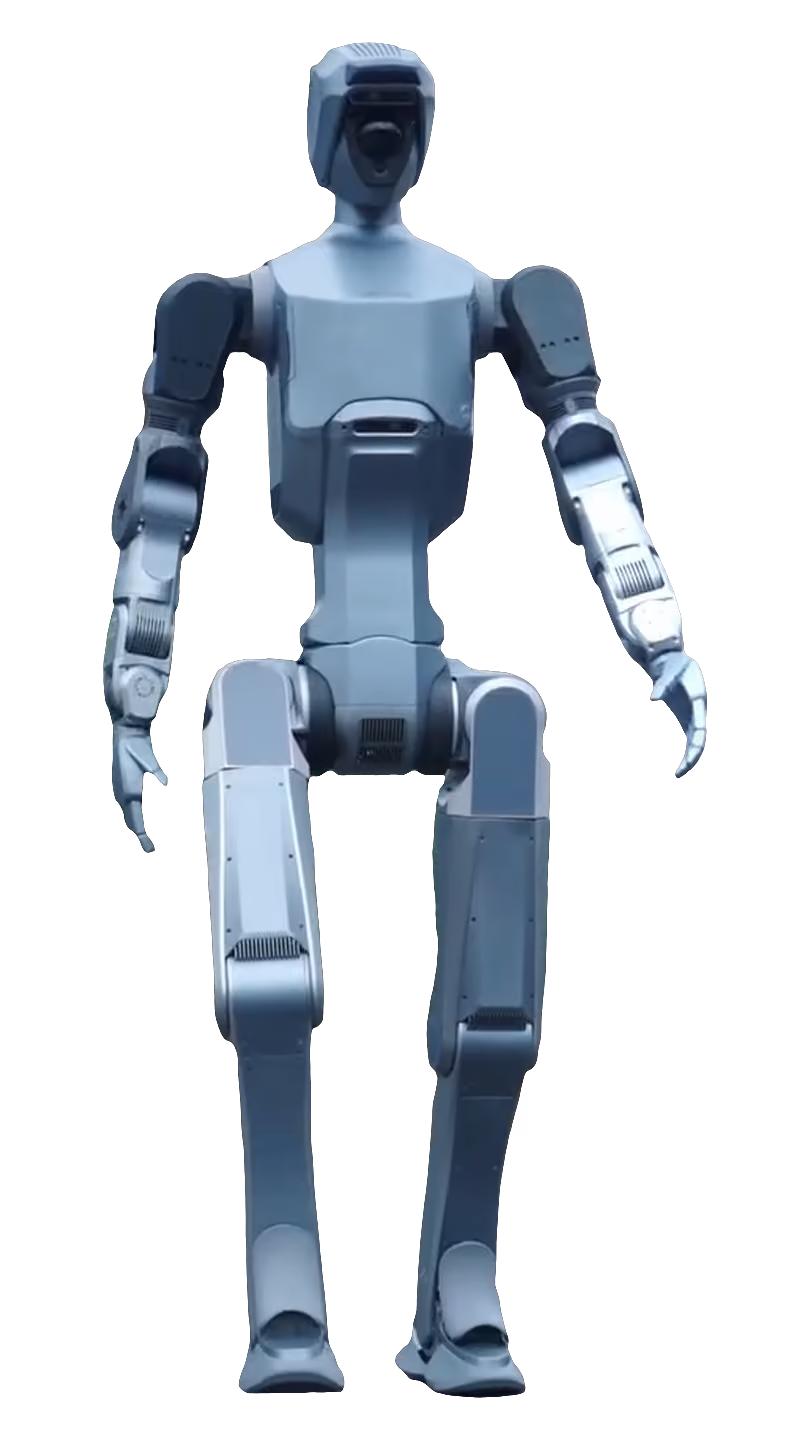
Humanoid Feature Explained

Learn what this feature means, why it is essential, and how it is used across different humanoid robots.
Logo Icon - Creditflow Webflow Template | BRIX Templates

Physical Form

Durability

A robot's ability to withstand wear and tear.

Ability to withstand wear, pressure, or damage over time. Robots used in military, security, or disaster response applications are often built with ruggedized hardware.

Examples

Industrial inspection robots like Boston Dynamics' Spot are IP54 rated to withstand rain and dust in harsh environments.

Humanoids With
Durability

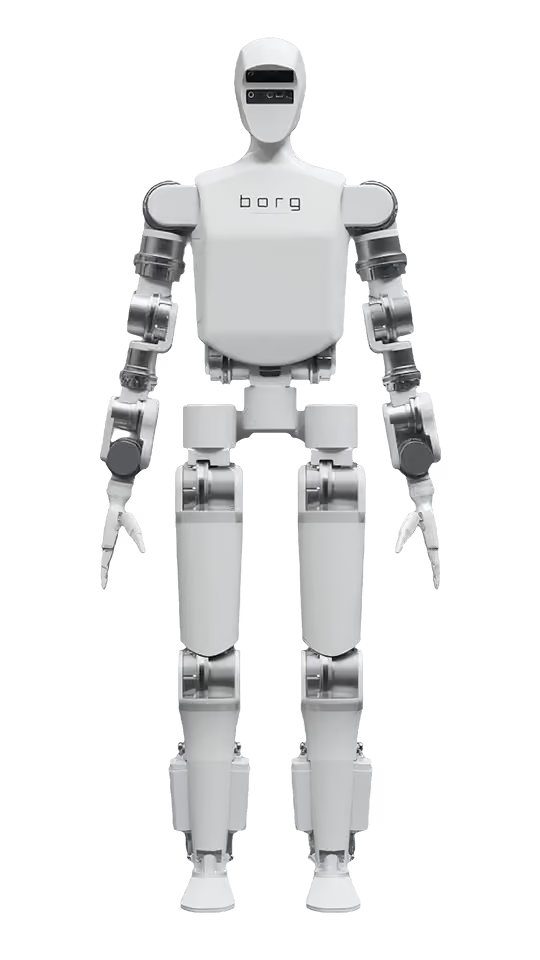
Borg 01

by

Borg Robotics

A humanoid robot designed for heavy-duty tasks in logistics and manufacturing, focusing on strength and endurance.

OceanOne

by

Stanford Robotics Lab

A "humanoid diver" robot designed for underwater exploration and teleoperated manipulation in deep-sea environments.

Missing a humanoid robot?

Browse more humanoid robot features

Filter the database by specific technical capabilities, mechanical specs, and physical attributes.

Agility
DoF
Dynamic Balance
Electromechanical
Hydraulics
Mobility
Navigation
Proprioception
Rotors
Anthropomorphic
Arms
Bio-Inspired
Bipedal
Dexterity
Digital Twin
Durability
Electromechanical
Furry
Hydraulics
Legs
Lifelike
Rugged
Skin
Soft
Versatility
Wheels
Whole-Body Control
Customizable
Electromechanical
Hydraulics
Modular
Autonomous
Battery Powered
Electromechanical
Energy Harvesting
Fully Autonomous
Hydraulics
Partially Autonomous
Self-Replication
Emotional Expression
HRI
Micro-Expressions
Speech
Voice Control
Grippers
Hands
Haptic Feedback
Manipulation
Payload
Fail-safe System
Lidar
Obstacle Avoidance
Tactile Sensors
Visual Sensors
AI
Cloud Connectivity
Emotional Intelligence
Facial Recognition
Kinesthetic Learning
Learning
Social Cues
Swarm Intelligence
Teleoperated